
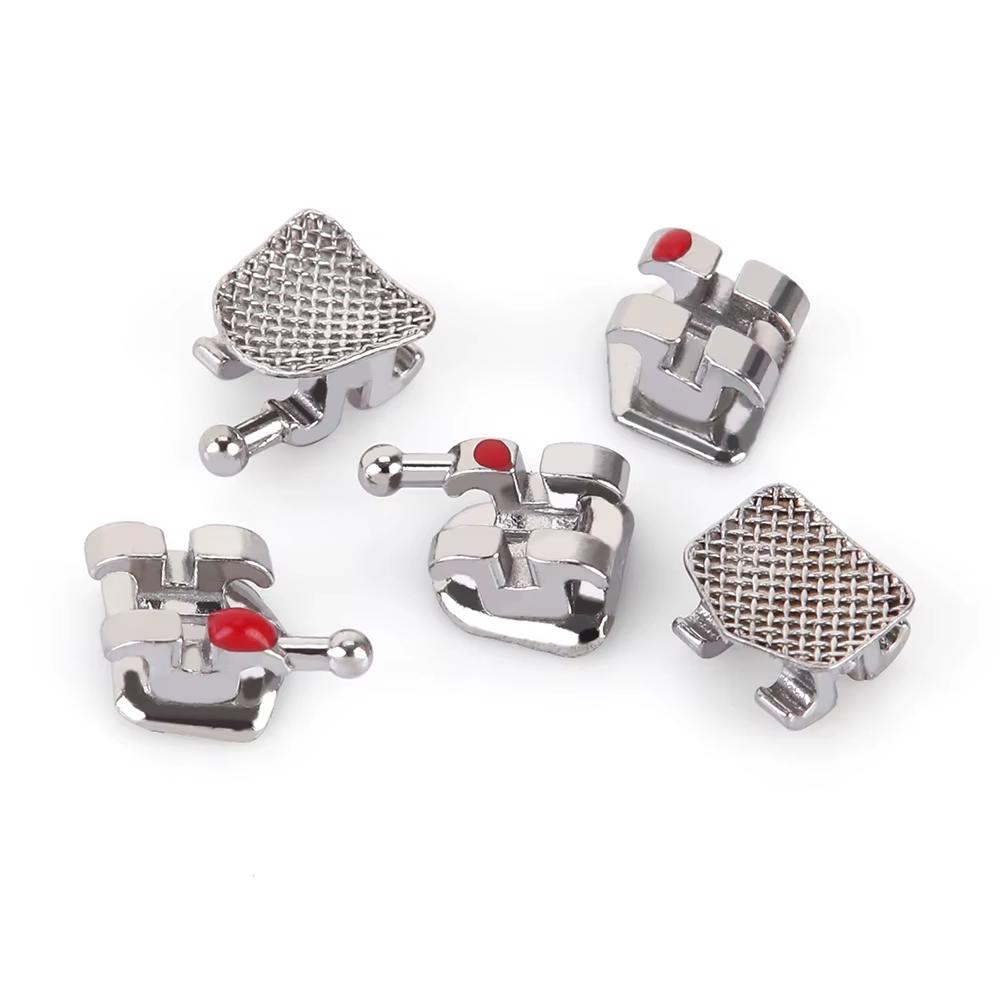
Metal orthodontic brackets are best classified by ligation mechanism, nominal slot size, prescription, body dimensions and bonding-base design. Conventional twin brackets retain the archwire with separate ligatures; self-ligating designs use an integrated closure. Neither the material name nor a familiar prescription identifies a complete system. For clinical selection, compare the tooth-specific prescription chart, wire compatibility, physical envelope and replacement arrangements together, then verify these details against current drawings and representative samples before establishing a clinic purchasing specification.
Start with the mechanism, not the catalog name
Searches for types of metal braces brackets often combine several independent features. A mini bracket can be conventional or self-ligating. Roth identifies a prescription family, whereas a mesh base describes retention geometry. These terms should occupy separate fields in a purchasing brief so a product name does not conceal a mismatch.
Conventional twins offer tie wings around an open slot. Their use depends on the selected ligature and the clinician's mechanics. Self-ligating brackets add a clip or door that contains the wire. Closure design changes handling and instrument requirements, but it does not independently establish treatment duration or clinical superiority. Our active versus passive self-ligating bracket guide separates closure behavior from slot engagement and torque considerations.
| Specification axis | Common descriptions | What the clinic should verify |
|---|---|---|
| Ligation | Conventional twin; self-ligating | Ligature or closure compatibility and instrument requirements |
| Nominal slot | .018-inch; .022-inch | Slot drawing, stated tolerance and planned wire dimensions |
| Prescription | Roth; MBT | Tooth-specific torque, tip, in-out and identification chart |
| Body format | Standard; mini | Mesiodistal width, height, profile and tie-wing access |
| Retention base | Mesh; integral textured base | Geometry, tooth adaptation and bonding instructions |
| Hook configuration | No hooks; selected hooked teeth | Exact tooth positions and available replacement codes |
Compare .018 and .022 slot systems carefully
Nominal size is a starting specification
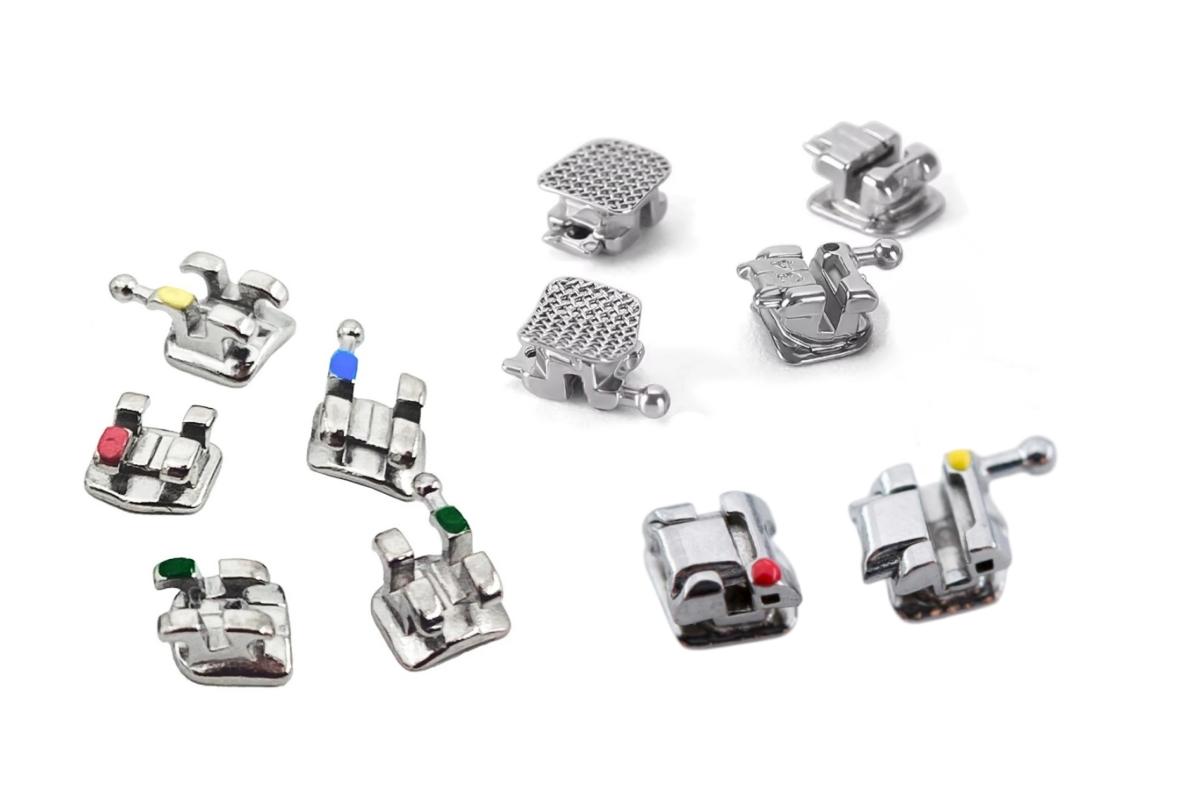
The .018 and .022 labels refer to nominal slot height in inches. They do not describe overall bracket size, exact manufactured clearance or an interchangeable wire sequence. A clinic should align its bracket system with its established wire inventory and clinical protocol. Purchasing staff should record both dimensions of rectangular wires rather than abbreviating them to a single number.
Measured slots can differ from their labels. An experimental study of complete bracket series documented dimensional variation, supporting verification beyond a nominal catalog label. This does not establish the tolerance of any Donlign product. Request the applicable drawing, measurement method and acceptance criteria for the specific series under consideration.
Slot and wire geometry work together
Torque engagement depends on the interaction between slot geometry and wire cross-section, including corner rounding and clearance. A prescription chart states intended built-in information; it does not guarantee that every wire expresses that information identically. Avoid substituting a different series solely because its slot label matches. The clinician should evaluate the intended combination, including ligation and working-wire specifications.
Read Roth and MBT as prescription families
Orthodontic metal Roth brackets and MBT brackets are common purchasing terms, but neither term identifies the complete per-tooth configuration. Confirm upper and lower arch positions, torque and angulation values, any alternative incisor options, and the orientation marks. Different suppliers can present variations under broadly familiar names.
The receiving team also needs a readable tooth map. If a clinic carries several prescriptions, separate storage and clear replacement labels reduce the chance of selecting a visually similar bracket from another system. Request a sample label and confirm whether the same tooth codes appear on individual units, set trays and reorder documents.
Assess the bonding base as a system
A mesh base provides mechanical retention features for adhesive; an integral base uses its own patterned geometry. Mesh count alone does not establish bond strength. Base curvature, adhesive compatibility, surface condition, bonding technique and the manufacturer's instructions all matter. Compare the base intended for each tooth rather than assuming a central-incisor sample represents the whole set.
Ask whether the supplied drawing shows base width, height and curvature. Inspect samples for visible contamination or damage, and follow the product instructions for handling and bonding. Do not infer a recommended surface treatment or cleaning process from another manufacturer's bracket. Base appearance is a screening observation, not a substitute for validated performance information.
Standard and mini refer to dimensions, not outcomes
Standard metal orthodontic brackets and mini formats differ in their physical envelope, but those labels have no universal dimensions across suppliers. A smaller body may change available interbracket distance or handling space; the practical effect depends on tooth anatomy, bracket placement and the chosen archwire. Ask for measured dimensions instead of treating mini as an inherently better option.
Review tie-wing clearance and hook projection as well as facial profile. The clinical team needs access for ligation and auxiliary placement without assuming that the smallest visible bracket will be the easiest to manage. Where aesthetics influence selection, compare complete assemblies rather than isolated brackets; the ceramic versus metal comparison explains the additional material and appearance questions.
Match the product listing to the purchasing brief
Use the orthodontic brackets catalog to compare the available bracket families before reviewing the specifications of an individual series.
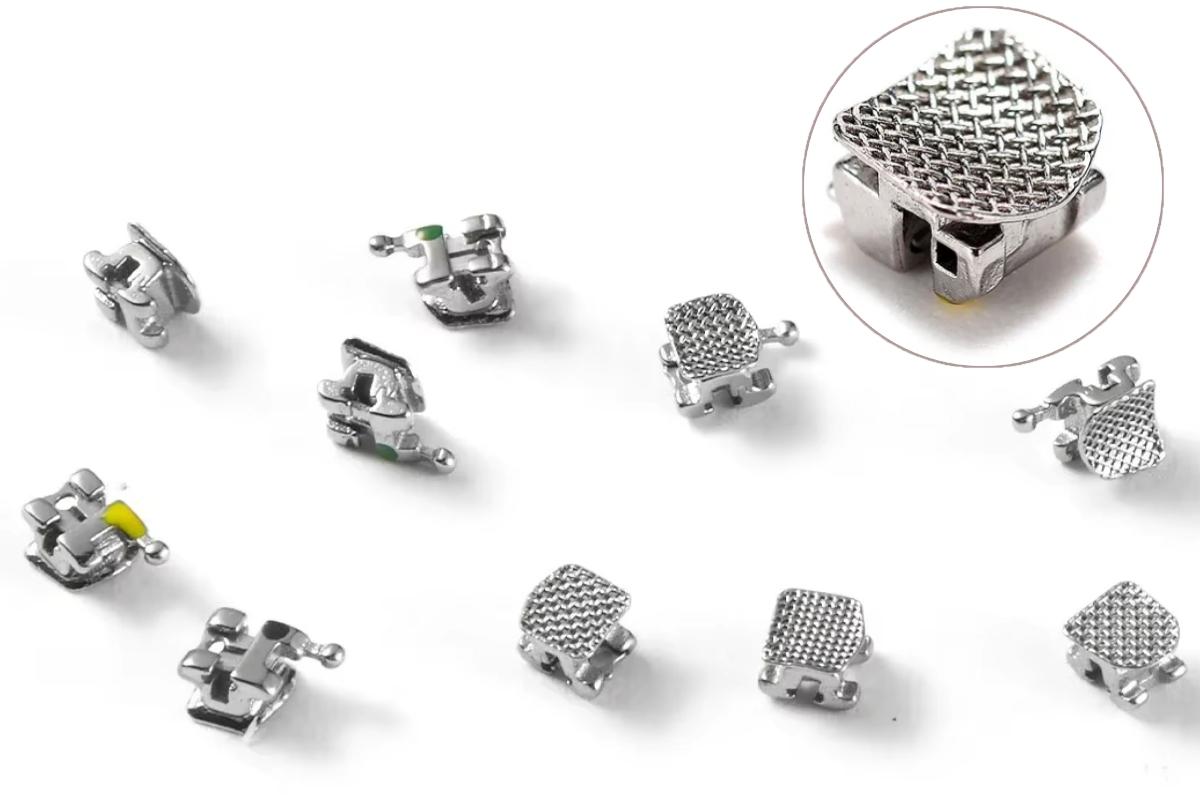
The current Donlign metal bracket listing describes conventional brackets with MBT or Roth prescriptions, .018 or .022 slots, Standard or Mini formats, and an 80-mesh base. It lists a 20-bracket set with ten brackets per arch. These are catalog identifiers to confirm in an inquiry, rather than evidence that a particular tolerance or clinical outcome has been established.
For a different ligation mechanism, the metal self-ligating bracket listing describes a passive sliding-door series. Keep it as a distinct purchasing line. A shared material or prescription name does not make its instruments, set contents or replacement components equivalent to those of a conventional series.
Use a documented sample review
Separate clinical and receiving responsibilities
The orthodontist should review prescription suitability, wire engagement, handling and intended auxiliary use. Procurement staff should check tooth allocation, packaging identity, legible lot information and reorder references. A receiving checklist should distinguish a visible inspection from a measured dimensional check, identifying who is responsible for each and what equipment is required.
Define changes before repeat orders
Retain the approved specification revision with the sample decision. Ask how changes to base geometry, hook positions, labeling or packing configuration will be communicated. Partner-factory supply arrangements should identify which documents apply to the actual series and batch. Request traceability and inspection information for review; do not assume that an attractive sample establishes repeat-order consistency.
Make the RFQ specific enough to compare
Include the prescription chart reference, slot system, Standard or Mini designation, hooked tooth positions, set contents and replacement needs. Add packaging and destination documentation requirements, asking which can be supported for the intended order. This produces comparable quotations and gives the clinic a written basis for accepting or querying a proposed substitution.
Request a B2B specification review
Send Donlign your bracket specification, planned wire system, sample-review requirements and packaging brief. Request B2B specification sheets and a quotation so product configuration, partner-factory documentation and supply arrangements can be confirmed for your clinic or distribution program.
Back to All Articles